Sign up to be notified of our new blog posts.
Equipment Considerations for Plant-Based Food Processing
Posted on June 30, 2025
Understanding the Plant-Based Boom
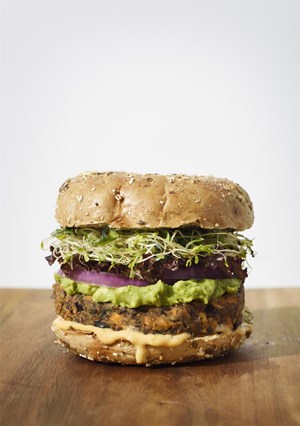
Summary: As plant-based food production scales rapidly, driven primarily by growing consumer demand and shifting dietary trends, the equipment used in manufacturing must keep pace. From moisture content to particle stability, scaling a meat analogue operation introduces unique mixing and heating challenges. This article breaks down key processing factors and offers insights into how processors can match the right equipment to their plant-based product goals.
According to recent research, the plant-based food market is expected to record a CAGR of 12.3% from 2024 to 2031, to reach $113.1 billion by 2031 (source Meticulous Research®).
This growth is driven by more than just dietary choices; rising health consciousness, sustainability goals, and interest in immune-boosting foods all play a role. With demand surging, manufacturers must move quickly to configure the right processing systems, especially for mixing, heating, and cooling.
Mixing Equipment Considerations for Plant-Based Food Production
In plant-based food manufacturing, mixing is one of the most critical steps. But scaling from R&D to full production presents challenges that differ from traditional protein or dairy applications.
If you’re looking to scale up a plant-based product line, these product characteristics should inform your equipment design:
- Moisture Content and Heat Distribution
Plant-based mixtures often start out highly fluid. Because many meat analogues require thermal treatment, it’s essential to design a mixing vessel that can efficiently initiate and distribute heat throughout the batch—especially as viscosity changes over time.
- Dry, Powdered Ingredients (e.g., Pea or Soy Protein)
High-protein ingredients in powder form may need to be pre-blended with water or oils before they’re introduced to the main vessel. Equipment may need loading features or lid configurations that minimize powder dispersion into the air—particularly in cleanroom or allergen-sensitive facilities.
- Protein Behavior, Rheology, and Viscosity
Each product is unique. Understanding how your ingredients respond to shear, heat, or time is essential. Sensitive proteins may denature if exposed to aggressive mixing. Products that change viscosity throughout the cycle may require dual-speed or multi-motion agitators.
- Desired Product Texture & Integrity
If your end-product includes visual or textural components—like black beans, mushrooms, or grains—your mixing method must prevent damage. Gentle agitation or specialty impellers may be needed to preserve the look and mouthfeel.
- Volume Goals & Scaling Behavior
Processes that perform well at the bench-top or pilot level may break down at commercial scale. Volume objectives influence not only vessel size, but also jacket style, agitator horsepower, and batch cycle times. Flow modeling and batch simulations can help anticipate scale-up issues.
Additional Facility Considerations
You may also need to account for:
- Utility availability (steam, glycol, chilled water, etc.)
- Ingredient costs (waste minimization strategies)
- Sustainability targets (green mixing technologies)
- Equipment flexibility (running multiple SKUs on one system)
Pilot Testing Options for Plant-Based Food Processors
At Lee Industries, we understand that plant-based processors face a steep learning curve when it comes to equipment selection.
That’s why our on-site testing lab offers a wide range of vessels, jacket types, and agitators so you can:
- Simulate full-scale production
- Optimize shear, heat, and blend rates
- Test cleaning and batch changeover times
This allows you to validate your formulation before committing to a full-scale investment.
Why Equipment Fit Matters More Than Ever
The plant-based sector is rapidly evolving. From burgers and nuggets to dairy-free sauces and vegan soups, new products are hitting shelves daily. The right processing equipment ensures:
- Consistent batch quality
- Optimized energy use
- Reduced waste
- Faster scale-up
By exploring your product’s behavior during each stage -- loading, mixing, heating, cooling, and discharge -- you’ll be better positioned to seize your share of this growing market.
Need Help with Your Plant-Based Product Line?
Whether you’re expanding capacity or troubleshooting a texture issue, our engineers can help. Contact us to discuss how to configure the right mixing and processing solution for your application.
Last Updated: 10/30/2025
Comments
Add Your Own Comment